

THEIR STORY
Ross William Ulbricht was born on March 27, 1984, in Austin, Texas. He was an Eagle Scout, graduated from the University of Texas at Dallas on a full academic scholarship with a degree in physics, and had no criminal history of any kind prior to his arrest.
In January 2011, at age 26, Ross created Silk Road, an anonymous online marketplace that operated on the Tor network and used Bitcoin for transactions. Motivated by libertarian ideals about free markets and individual privacy, Ross built the site to enable peer-to-peer commerce beyond the reach of centralized authorities. While Silk Road hosted listings for a variety of goods, the majority of transactions involved illegal narcotics. The site's rules prohibited anything involuntary or that could harm a third party, including stolen goods, child exploitation material, and weapons of mass destruction. The platform operated for approximately two years and nine months.
On October 1, 2013, FBI agents arrested Ross in the science fiction section of the San Francisco Public Library. He was 29 years old. Silk Road was simultaneously seized and shut down. At the time of its closure, the site had facilitated transactions estimated at over $200 million and Ross had earned approximately $13 million in commissions.
Ross was tried in the Southern District of New York before U.S. District Judge Katherine Forrest. In February 2015, after a four-week trial, a jury convicted him on all seven counts: distributing narcotics, distributing narcotics by means of the internet, conspiring to distribute narcotics, engaging in a continuing criminal enterprise, conspiring to commit computer hacking, conspiring to traffic in false identity documents, and conspiring to commit money laundering. Notably, Ross was not charged with or convicted of personally selling any drugs or illegal items. His conviction rested on his role as the creator and operator of the platform on which others conducted transactions.
Federal prosecutors alleged that Ross, operating under the pseudonym "Dread Pirate Roberts," solicited six murders-for-hire to protect Silk Road's operations and its users' anonymity. No evidence exists that any of these killings were actually carried out. Critically, prosecutors chose not to include murder-for-hire charges in the New York trial. The allegations were never presented to a jury, never subject to cross-examination, and never proven beyond a reasonable doubt. A separate indictment on a single murder-for-hire charge was filed in Maryland but was ultimately dismissed with prejudice. Despite the fact that these allegations were never tried, Judge Forrest considered them at sentencing, finding by a preponderance of the evidence — a far lower standard than beyond a reasonable doubt — that Ross had likely sent messages inquiring about such orders.
The integrity of the investigation itself was compromised. Two federal agents who played significant roles in the Silk Road probe were subsequently arrested and convicted of serious crimes committed during the investigation. DEA Special Agent Carl Force was sentenced to six and a half years for wire fraud, theft of government property, money laundering, and extortion. Secret Service Special Agent Shaun Bridges was sentenced to nearly six years for money laundering and obstruction of justice. Both agents had stolen hundreds of thousands of dollars in Bitcoin while working undercover on the case. The corruption was not disclosed to the defense or the jury during Ross's trial, and his subsequent motion for a new trial based on this corruption was denied.
On May 29, 2015, Judge Forrest sentenced Ross to double life imprisonment plus 40 years without the possibility of parole, and ordered restitution of approximately $183 million. The sentence stunned observers in the courtroom. It was harsher than what the prosecution had recommended and is a punishment typically reserved for the most violent drug cartel leaders and serial killers. At sentencing, Ross delivered a statement of remorse, accepting responsibility for his role in the harm caused by Silk Road.
The sentencing disparity between Ross and every other individual involved in Silk Road is stark. Other defendants — including people who actually sold drugs on the platform, administrators who helped run the site, and the individuals who built and operated Silk Road 2.0, a larger successor site — received sentences averaging approximately six years. All but one have been released. Ross received a sentence roughly 20 times greater than the average imposed on his co-defendants.
Ross's appeals were unsuccessful. The Second Circuit Court of Appeals upheld his conviction and sentence in 2017. In 2018, his legal team at Williams and Connolly, supported by 21 organizations, petitioned the U.S. Supreme Court, challenging Fourth and Sixth Amendment violations in the case. The Court declined to hear it.
Throughout more than 11 years of incarceration, Ross maintained an exemplary record. He received zero disciplinary infractions. He led educational classes, facilitated support groups, mediated conflicts among fellow inmates, and served as a Suicide Watch Companion. He created artwork that raised over $800,000 for charity through a fund called Art4Giving. Despite his nonviolent history and low security classification, he was held at a maximum-security facility based solely on the length of his sentence.
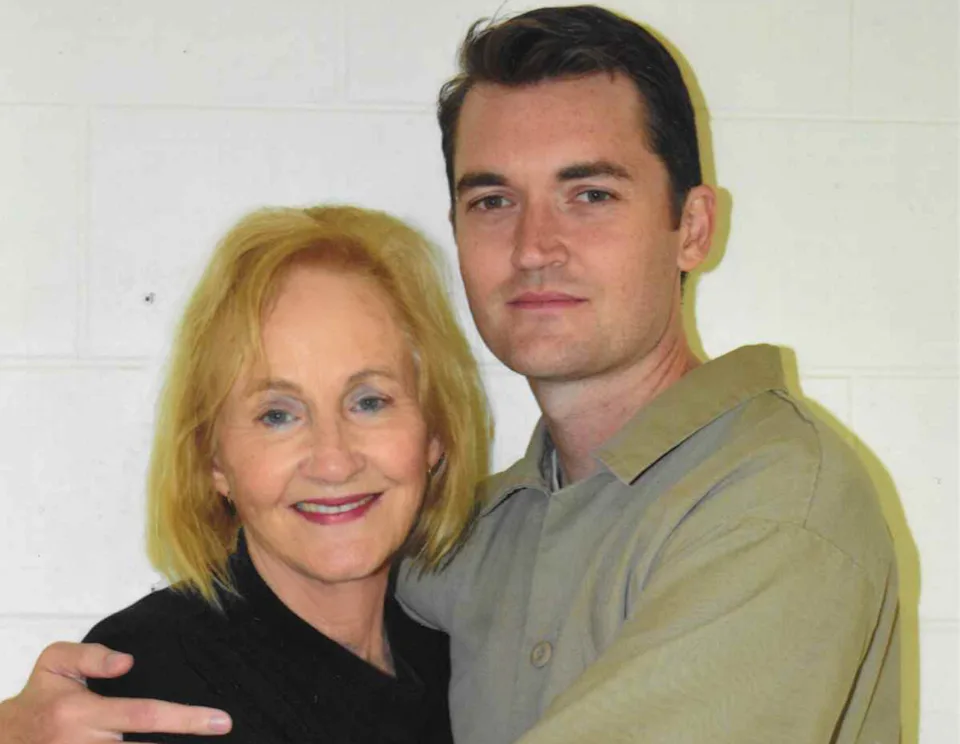
The campaign to free Ross was led by his mother, Lyn Ulbricht, who dedicated nearly 12 years of her life to advocating for her son's release. The Free Ross movement grew into one of the most prominent clemency efforts in modern American history, drawing support from over 250 organizations and prominent individuals across the political spectrum, including libertarian politicians, prison reform advocates, legal scholars, and the cryptocurrency community. A petition for clemency gathered more than 600,000 signatures.
On January 21, 2025, President Donald Trump granted Ross a full and unconditional presidential pardon, fulfilling a pledge he had made at the 2024 Libertarian National Convention. Ross was released from a federal prison facility in Tucson, Arizona that evening and was reunited with his family. He had served 11 years and 3 months.
During her years fighting for Ross, Lyn Ulbricht met countless other families devastated by excessive sentences. That experience led her to found MACS — Mothers Against Cruel Sentencing — to continue the fight for mercy and fairness in the justice system for the thousands who remain behind bars.