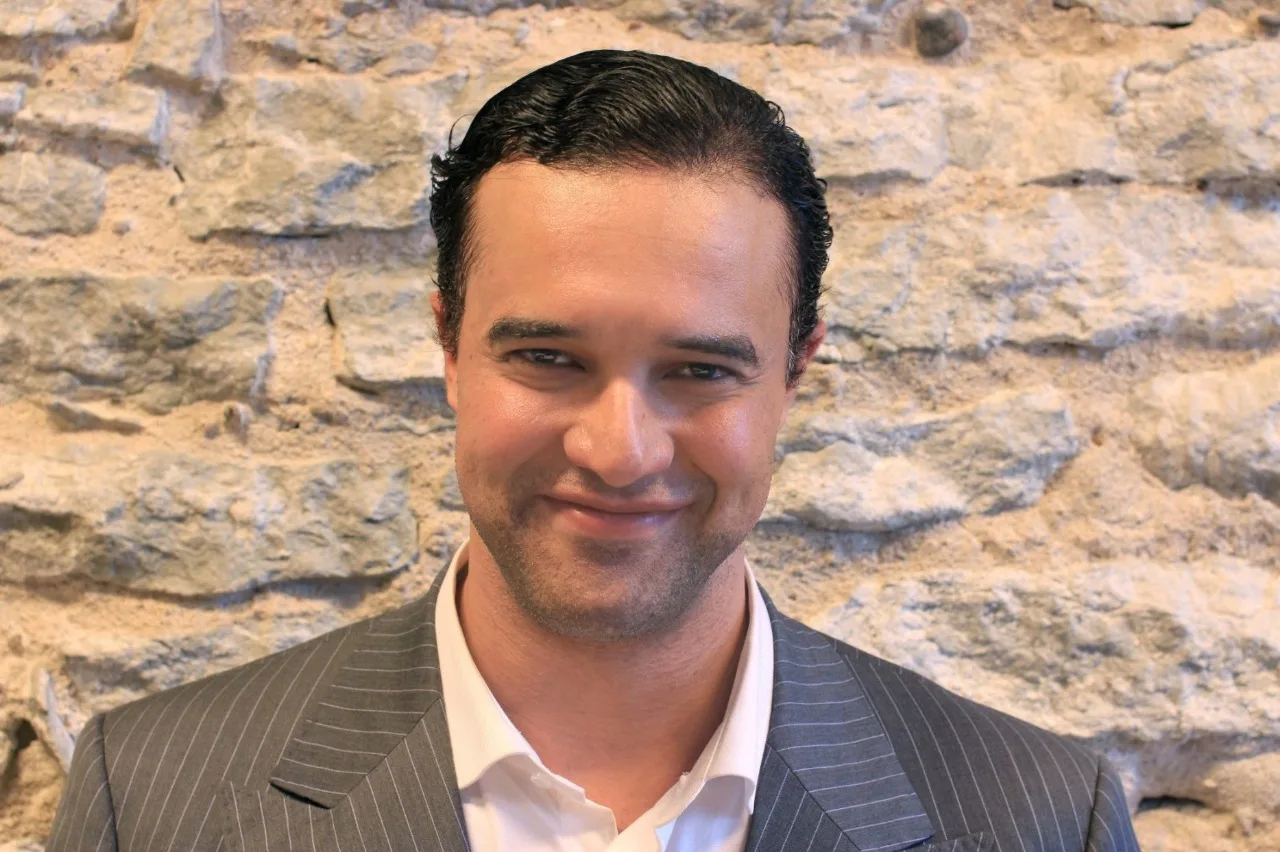
Ray Youssef
Federal — Eastern District of California
Ray Youssef
Click to enlarge
SENTENCE
Awaiting trial. Not yet convicted. Currently released under supervision; cannot leave the United States.
CHARGES
Conspiracy to evade anti-money laundering requirements Operating an unlicensed money transmitting business Conspiracy to facilitate illegal prostitution-related activity (Travel Act violation)

THEIR STORY

Ray Youssef was born in Egypt and came to the United States at age two. He grew up in New York City, helping his parents operate newsstands at Columbus Circle and in Hell’s Kitchen. He attended Baruch College, earning a degree in history. He taught himself to code at 19.

In 2011, Ray traveled to Egypt to participate in the Arab Spring. He marched in Tahrir Square, was wounded during clashes, and was interrogated by the military. He returned to the U.S. and participated in Occupy Wall Street. These experiences convinced him the global financial system was fundamentally broken.

In 2015, Ray co-founded Paxful with Artur Schaback. The platform allowed users to buy and sell Bitcoin using over 300 payment methods. Paxful grew rapidly in developing markets — by 2022, it had over 12 million users. Ray founded the Built With Bitcoin Foundation, building schools and infrastructure across Africa and Latin America.

Ray resigned as CEO in April 2023, giving up all shares due to a disagreement with Schaback. He founded NoOnes, a new platform with a similar mission. In early 2026, he was removed as CEO following his indictment.

The federal case centers on Paxful’s compliance failures during Ray’s tenure as CEO. Prosecutors allege inadequate KYC procedures and connection to Backpage transactions. Ray has pointed out that Paxful registered with FinCEN in 2015, eventually built one of the largest compliance teams in peer-to-peer crypto (88 of 300 employees), and obtained money transmitter licenses in every required state.

Co-founder Schaback pleaded guilty in July 2024 and is cooperating. Paxful itself pleaded guilty in December 2025 to three charges and agreed to a $4 million fine, reduced from a potential $112.5 million.

Ray’s indictment came four days after Paxful’s plea. He was arrested in Mexico and deported. He cannot leave the United States pending resolution. The contrast between how the system treats a man who built schools in Africa and how it treats others in the cryptocurrency space is a question MACS believes deserves public scrutiny.

WHY THEY DESERVE A PARDON

Ray Youssef is an Egyptian-American entrepreneur, Bitcoin advocate, and philanthropist who built Paxful into one of the largest peer-to-peer cryptocurrency marketplaces in the world, serving over 12 million users — millions of them in Africa, where traditional banking infrastructure excludes the majority of the population from the global financial system. Through the Built With Bitcoin Foundation, Ray funded the construction of more than a dozen schools, solar power installations, clean water systems, and farming infrastructure across Rwanda, Nigeria, Kenya, Ghana, South Africa, and El Salvador. He built Paxful so that a young woman in Lagos could convert a $5 gift card into Bitcoin and pay for an online course. He built it so that families could receive remittances without losing 15% to wire transfer fees. He built it so that people shut out of the global economy could participate in it for the first time. In December 2025, the DOJ indicted Ray on charges stemming from Paxful’s alleged failure to implement adequate anti-money laundering controls and its connection to transactions on Backpage. Ray was arrested in Mexico, deported to Los Angeles, and held until a judge ordered his release under supervision. He describes the charges as politically motivated and says the case rests on approximately $240 worth of Bitcoin transactions. Ray gave up all of his Paxful shares when he left the company in 2023 over a disagreement with his co-founder. He is not a wealthy man trying to buy his way out of trouble. He is an activist and builder facing federal prosecution for the compliance shortcomings of a company he no longer runs. Ray Youssef grew up helping his parents run a newsstand in Hell’s Kitchen. He marched in Tahrir Square during the Egyptian Revolution. He helped rebuild a school in New Orleans after Hurricane Katrina. He taught himself to code at 19 and launched eleven startups before finding Bitcoin. He spent a decade trying to connect the world’s poorest people to the global economy. The federal government’s response is to prosecute him.

WATCH